
Grow-Your-Own Antimicrobial Stewardship Culture


Veterinary Prescriber presents this practical toolkit for creating a culture of antimicrobial stewardship in the veterinary practice, in five short parts. The series has also been published as a single module in Veterinary Prescriber’s Virtual Veterinary Medicines Academy. Start the series with this introduction. The series (like all our multimedia modules) includes audio, so you can read while you listen. If you prefer you can listen to the complete audio version in a podcast. Download it and share with your team. The module was created by Veterinary Prescriber in collaboration with Simon Robinson of Operability.
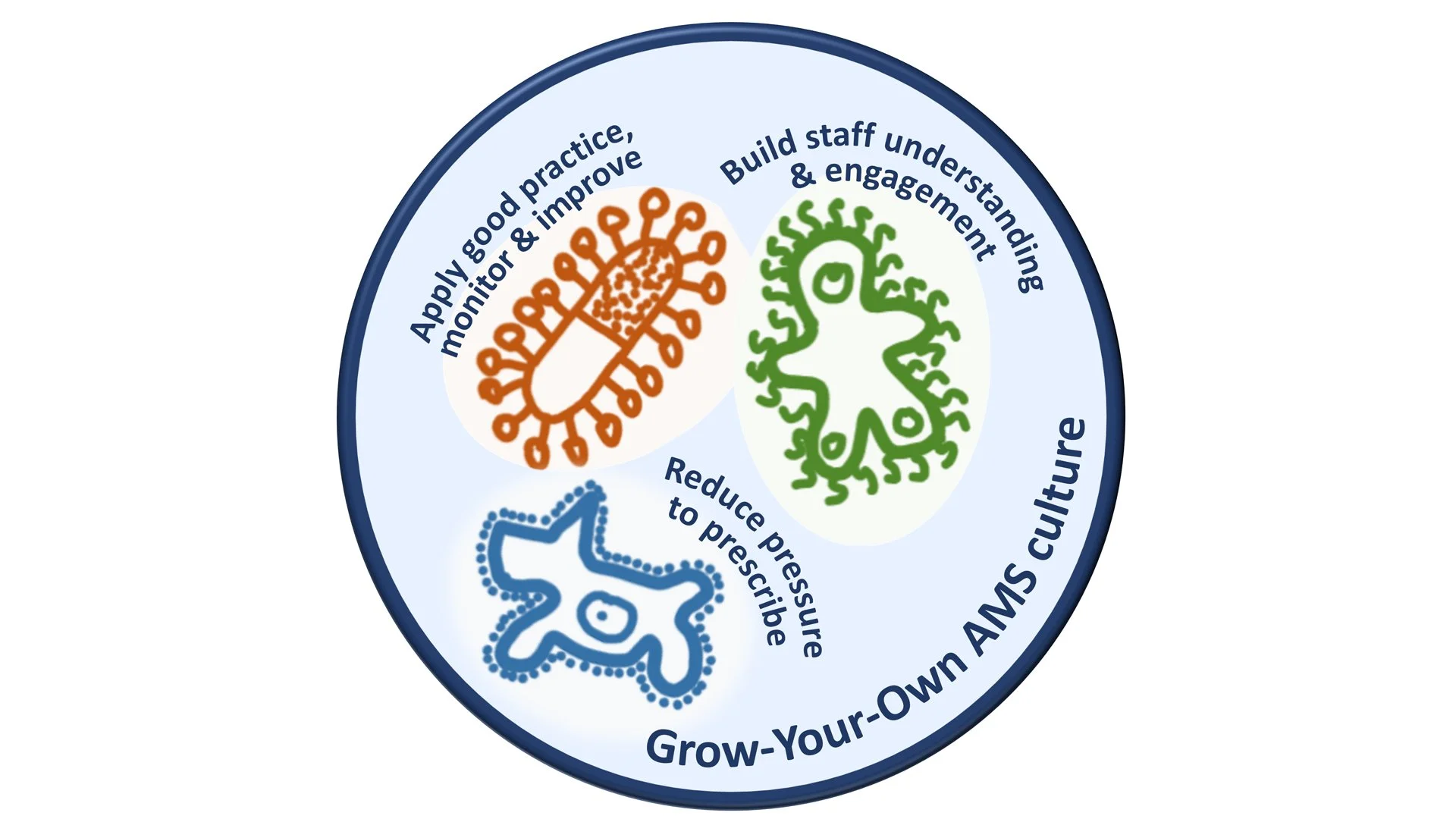
Antimicrobial stewardship is not simply about following policies and prodedures, because these are unlikely to succeed without a conducive environment. In this Veterinary Prescriber module, we are using the concept of a petri dish to illustrate the three conditions (represented by three ‘microorganisms’) that are needed in the veterinary practice to promote an environment in which staff can practice antimicrobial stewardship. Our module will guide you through the process of building a good antimicrobial stewardship culture.
The three conditions are :
Apply good practice, monitor and improve
Build staff understanding and engagement
Reduce pressures to prescribe
Introduction
Antimicrobial stewardship is an organisational or healthcare-system-wide approach to promoting and monitoring the prudent use of antimicrobials to prevent the development of resistance and so preserve their future effectiveness. By antimicrobials, we mean anti-infective therapies, which include antibiotic, antiprotozoal, antiviral and antifungal drugs) and all formulations of these (oral, injectable and topical). (NICE 2015; VMD 2023)
There are lots of practical things that we can to moderate the use of antimicrobials in veterinary practice. It is important to be aware that it is more than simply having procedures and policies. Practice staff need support to create a culture of new habits, and there is a need to address some of the unintended pressures to prescribe anti-infectives that can come from business aims, workload and clients.
What are we trying to achieve through antimicrobial stewardship?
Every person who causes the use of an antimicrobial drug, whether in human or veterinary medicine, plays a role in the development of antimicrobial resistance. The goal in antimicrobial stewardship is to reduce the pressure on microorganisms to become resistant to some of the most important medicines we use. There are three important objectives to meet to achieve this goal:
Restrict the use of antibiotics that are critically important in human medicine. These are Category B antibiotics in the Antimicrobial Advice Ad Hoc Expert Group (AMEG) infographic. You can see list of 'Restrict' antibiotics in the AMEG infographic by clicking the link).
Minimise any unnecessary use of first-line antimicrobials (category D antibiotics in the AMEG infographic by clicking the link).
Maximise the effectiveness of antimicrobials when used.
In our antimicrobial stewardship petri dish, we are trying to grow a culture of good antimicrobial stewardship. To do this we must:
Apply good practice, monitor and improve
Build staff understanding and engagement
Reduce pressure to prescribe
These are the conditions needed to create an environment for antimicrobial stewardship to become embedded in the culture of your practice. In this module, we’ll consider each of these conditions in turn. Now click on the first image below to go to Step 1.
Get a free month’s Veterinary Prescriber practice subscription
Use the code VETRxPractice at check out to get 12 months for the price of 11.
Find out more about our practice subscriptions here.