
Flea and tick collars for cats and dogs - what vets and SQPs need to know
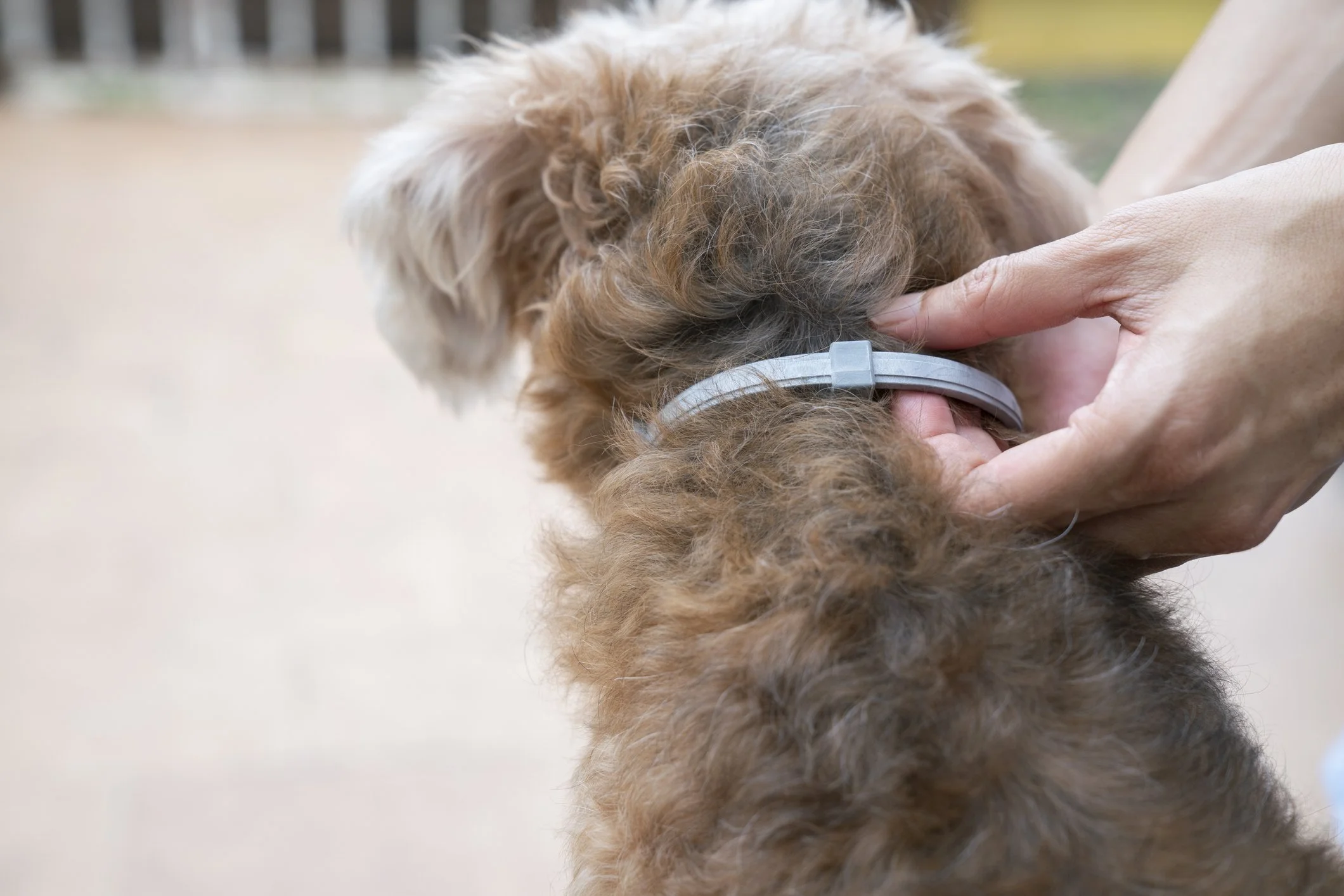
More choice in the flea and tick collar market
A new-to-market flea and tick collar for cats and dogs was among the listings in the September 2026 edition of Veterinary Prescriber’s Medicines News (a regular roundup of newly marketed and licensed veterinary medicines, changes to product information and reclassifications).
The new collar, Prevexto, is a generic* product based on the brand Seresto. Both these contain the parasiticide ingredients imidacloprid (which kills fleas, larvae, and lice) and flumethrin (which kills and repels ticks).
*Generic veterinary medicinal products are assumed to have the same efficacy and safety as the original brand.
The arrival of Prevexto increases the number of medicinal flea and tick collars available to buy in the UK to four: Canishield (for dogs), Prevexto (dogs and cats), Scalibor (dogs) and Seresto (dogs and cats). All are available without a veterinary prescription, with Canishield available on general sale (see the table of products below).
Collars are an option among a range of formulations (spot-ons, tablets, injection) for the treatment of fleas and ticks and they have the longest lasting preventive effect. The inclusion of a pyrethroid (deltamethrin or flumethrin) gives them a particular role in parasite disease protection as repellents against Rhiphicephalus sanguineus ticks in dogs travelling to countries where Erlichia canis is endemic and sandflies in countries when Leishmania infection is endemic.
Environmental concerns apply to collars too
As for all the parasiticide options, the use of collars should depend on risk of infestation. Because, like the other options, the risks associated with adding parasiticide chemicals to the environment need to be thought about too.
It is the spot-on formulations that have come under the spotlight recently through published research on river contamination, in the parliamentary enquiry, and also in regulator and industry educational campaigns. Collars have pretty much been ignored, although the environmental concerns are the same. This might leave people wondering whether the same concerns apply, or assuming that collars are a safe option for the environment. It is even possible that the scrutiny of spot-ons might result in some pet owners switching to collars instead (and why it might seem a good time to bring a new product to market).
How collars work is that parasiticide ingredients, which are impregnated in the collar material, are slowly and continuously released in low concentrations and spread from the site of contact over the entire skin surface. The parasiticide effect of collars lasts 5 to 8 months (depending on the brand and the target parasite). So collars work in the same way as spot-ons, with the product continuously replenished from the depot in the collar, instead of having to be reapplied monthly with a spot-on dropper.
The European Medicine Agency reflection paper on parasiticides and the environment in 2022 noted that although collars are used less commonly than spot-ons and tablet formulations, they contain greater amounts of parasiticide drug. While the amounts released from the collars to the animal and subsequently to the environment before disposal are unknown (because they have not been studied as much as spot-ons), it is estimated that more than half of the active substance remains in the collar at the time of disposal (Stanneck et al. 2012).
Include collars in the considerations and education about the rational use of pet parasiticides
Collars, not just spot-ons, should be included in policy and regulatory decision-making about the supply and responsible use of pet parasiticides. Educating pet owners about the safe use and disposal of collars is just as important as it is for spot-ons. The regulator and companies also need to pay attention to the messages in the packaging information about dog swimming, because there are inconsistencies between the products. The leaflets for Canishield and Prevexto clearly say treated dogs should not enter water courses, whereas the other two are contradictory or ambiguous (see the table).
Medicinal collars for cats and dogs on sale in the UK
| Brand, species, supply category | Parasiticide ingredient(s) | Target parasites and duration of effect | SPC advice about swimming dogs |
|---|---|---|---|
|
Canishield dogs AVM-GSL |
deltamethrin | fleas ticks, sandflies. 4 to 6 months | Dogs wearing the collar are not allowed to enter watercourses. The product should not enter water courses as deltamethrin may be dangerous for fish and other aquatic organisms. |
|
Prevexto cats, dogs NFA-VPS |
imidacloprid, flumethrin |
fleas, ticks, lice (dogs). 8 months | The product should not enter water courses as imidacloprid and flumethrin may be dangerous for fish and other aquatic organisms. Dogs wearing the collar should not be allowed to swim in water courses. |
|
Scalibor dogs NFA-VPS |
deltamethrin | ticks, sandflies, mosquitoes. 5 to 6 months | Collar should always be removed before swimming and bathing the dog to avoid adverse effects on aquatic organisms. Dogs may be prevented from swimming in water for the first 5 days of wearing the collar. |
|
Seresto cats, dogs NFA-VPS |
imidacloprid, flumethrin |
fleas, ticks, lice (dogs). 8 months | The product should not enter water courses as imidacloprid and flumethrin may be dangerous for fish and other aquatic organisms. |
The non-prescription sales categories for veterinary medicines in the UK are: NFA-VPS (non-food animal-vet, pharmacist, SQP), which must be supplied with professional advice by a vet, pharmacist or SQP (suitably qualified person); and AVM-GSL (authorised veterinary medicine - general sales list), which can be sold from any retail outlet without professional advice.
Non-medicinal flea collars
Various non-medicinal flea collars are also on general sale. Pet owners might not know the differences between these and the medicinal collars. As they are not authorised veterinary medicines, their efficacy, safety and quality are not regulated. Medicinal claims (e.g. ‘treats flea infestation” are not permitted. Some non-medicinal collars contain a repellent (such as diethyltoluamide [DEET], margosa [neem oil]).' These can claim to repel ectoparasites. Their marketing is covered by legislation on biocides under the control of the Health and Safety Executive (HSE). Although these ingredients are approved for use as insecticides by the HSE they are not supported by evidence of effectiveness in preventing and treating infestations in animals in the same way as medicinal products.
For more information
If you’re interested in the systemic-acting parasiticide products: isoxazolines tigolaner and selamectin (in tablets, spot-ons and injection) click the link:
Choosing systemic-acting flea and tick treatments with the environment in mind
References
European Medicines Agency. Reflection paper on the environmental risk assessment of ectoparasiticidal veterinary medicinal products used in cats and dogs. 16 December 2022. [online]. Reflection paper on the environmental risk assessment of ectoparasiticidal veterinary medicinal products used in cats and dogs (europa.eu).
Parliament.uk. Environment and Climate Change Committee Paws for concern: pets, parasites and pollution. https://publications.parliament.uk/pa/ld5902/ldselect/ldenvcl/45/4502.htm
Stanneck, D., Ebbinghaus-Kintscher, U., Schoenhense, E., Kruedewagen, E.M., Turberg, A., Leisewitz, A., Jiritschka, W. and Krieger, K.J. (2012) ‘The synergistic action of imidacloprid and flumethrin and their release kinetics from collars applied for ectoparasite control in dogs and cats’, Parasites & vectors, 5(1), pp. 73–73. doi:10.1186/1756-3305-5-73.